
Montgomery Directory Runs and Repositories
The main historical shelf is Alabama Department of Archives and History record group LPR104. It combines early microfilm, a long bound-volume run, and several address-first cross-reference books. The Juliette Hampton Morgan Memorial Library adds a local option through its restricted, noncirculating Montgomery Room. Early page images are also free online. These channels are complementary: the digital set is fast for an early name, the Montgomery Room is useful for local help, and ADAH has the broadest documented run.
| Collection | Years represented | Repository | How to use it |
|---|---|---|---|
| Early Montgomery directories | 1859–60, 1866, 1873, 1878, 1880–81, 1883–84, 1887, 1888, 1891 | ADAH Research Room | On-site microfilm |
| Bound Montgomery volumes | 1880 through July 2007, with listed gaps | ADAH LPR104 | Noncirculating on-site volumes |
| Greater Montgomery cross-reference books | 1993–97, 2002, 2003 | ADAH | Address-first lookup on site |
| Montgomery Room local volumes | Exact run not published online | Juliette Hampton Morgan Memorial Library | Restricted, noncirculating access |
| Digitized early editions | 1859–60, 1866, 1878 | ADAH Digital Collections | Free page images online |
The archive inventory reaches July 2007, but that fact does not prove publication ceased then. It only establishes the latest edition in the documented holding. The early run is intermittent, while twentieth-century coverage becomes much closer to annual. Researchers should check the official ADAH city-directory finding aid for exact boxes, combined years, and duplicate copies before a visit.
| Milestone | Montgomery directory record |
|---|---|
| 1859–60 | Earliest surviving digitized edition in the documented run |
| 1878 | Beale & Phelan directory and city history |
| 1993–97 | Greater Montgomery address-first cross-reference series |
| 2002–03 | Later Montgomery cross-reference volumes |
| July 2007 | Latest printed volume listed in the current ADAH holding |
This timeline marks holdings, not a claim that every intervening year survives or that publication ended after the last listed volume.
Montgomery City Directories Online
Three early Montgomery volumes can be read as page images through the ADAH historical and genealogical publications collection. The set includes the 1859–60, 1866, and 1878 editions. Mears & Turnbull published the first of these, while Beale & Phelan, assisted by M. P. Blue, issued the 1878 directory and history. Later publishers should be taken from each title page because the official finding aid does not name a publisher for the whole run.
The ADAH digitized-publications screen below is the direct public route into those editions.
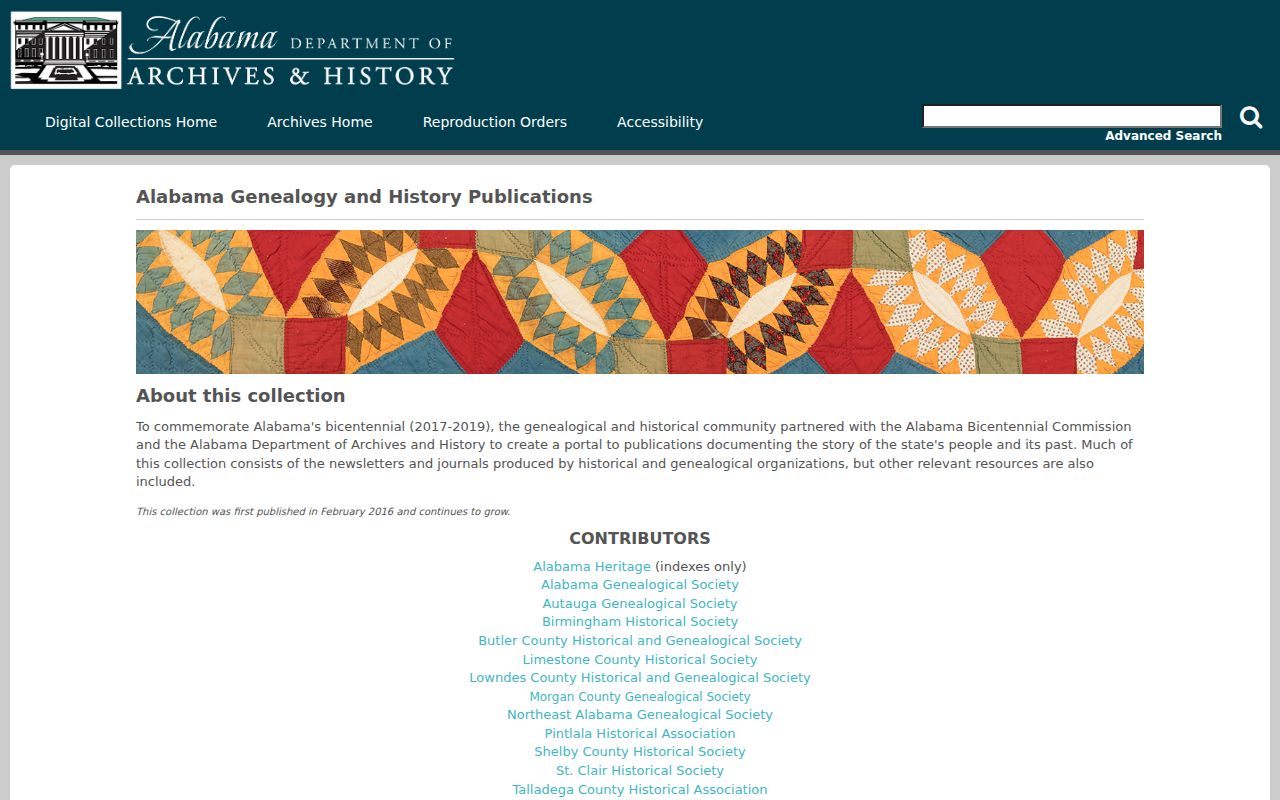
The collection view confirms that online access covers a valuable early slice, not every volume on the physical shelf. Search the digital catalog first, then carry any gap to ADAH or the Montgomery Room rather than assuming a missing scan means a missing book.
ADAH's catalog also links the complete 1859–60 Montgomery directory scan. Its page images are crucial when text recognition breaks on initials, worn type, or repeated shorthand. Browse nearby names and compare the street section. That small step often recovers what a strict name search misses.
Decode a Montgomery Directory Entry
The 1859–60 edition shows how much detail can fit in one short line. A listing may give a surname, first name or initials, a deceased spouse after “wid,” a trade, a place of business, and a home or boarding clue. Addresses may be stated by an intersection or as a point between streets. “Do” repeats the prior detail. Capitals in this volume mark advertisers and subscribers, not social rank.
| Name form | Surname plus given name or initials; partnerships may name their partners. |
|---|---|
| Family clue | “Wid” identifies a widow and may name the deceased spouse. |
| Work clue | A trade, office, or business address may appear. |
| Place clue | “H” means house, “bds” means boards, and cross streets may replace a number. |
| Repeated text | “Do” carries forward the line above, so the prior entry must be read too. |
The volume does not systematically supply age, race, birthplace, phone number, property status, or a complete household. Its evidence is a dated published snapshot. Copy the whole entry, including punctuation and shorthand, before interpreting it.
- Cross-reference directory
- An address-first volume that arranges listed occupants by street and house number.
- Householder index
- A list built around the person associated with an address, not a full family roster.
- Abbreviation key
- The volume's own legend for short forms such as h, bds, wid, cor, and opp.
Montgomery Directory OCR Can Mislead
Text recognition is a convenience, not the final record. Nineteenth-century type, tight columns, ink loss, initials, and the repeated “do” notation can all distort a search. Try a surname fragment, spouse name, occupation, or known street. Then inspect the page image above and below the hit. An alphabetical neighbor may reveal a line break that the search engine joined to the wrong person.
Insider tip. Photograph or save the abbreviation page before transcribing names; each edition's own key controls the meaning of its marks.
A missing OCR hit is not proof that someone was absent from Montgomery. The 1859–60 volume reflects a slaveholding city and did not enumerate the population on equal terms. Later Jim Crow-era publications also reflect segregated institutions and uneven collection. Church records, census schedules, newspapers, and Alabama State University collections can restore people whom one commercial publication undercounted or omitted.
Trace Montgomery Households by Edition
A steady edition search starts near a known marriage, move, death, school year, or deed. It then works in both directions. Do not leap from one matching name to a conclusion, especially when initials repeat. Keep a log with the printed name, home clue, work clue, spouse notation, edition date, and page.
- Find the strongest known person in the closest Montgomery edition and copy the entry exactly.
- Check one earlier and one later volume. Record spelling shifts, moves, and changes in occupation.
- Use the street section or a later cross-reference book to see who else was listed at the address.
- Pair 1900 through 1950 directory evidence with the corresponding released federal census schedule.
- Test a disappearance with an obituary, cemetery record, probate file, or a directory in the destination city.
The 1950 census is the latest public population schedule under the federal 72-year rule. A census can establish family relationships and ages that a printed listing lacks. The annual volumes fill the years between those ten-year snapshots. Together, they can distinguish a brief absence from a long move and a widow notation from a same-name coincidence.
Note: A person's disappearance may reflect a move, death, omission, or choice not to be listed; no single cause should be assumed.
Montgomery Archives Stay Open for Research
The ADAH EBSCO Research Room at 624 Washington Avenue is the main hands-on directory desk. It provides printed volumes, county microfilm, maps, newspapers, and access to many FamilySearch images as an affiliate library. The room is open Tuesday through Saturday, 8:30 a.m. to 4:30 p.m. The Montgomery Room at 245 High Street is a second local shelf; call 334-625-4999 about access to its restricted materials.
A museum exhibit closure announced during renovation did not close the EBSCO Research Room. That distinction matters. Archive research continued even while exhibit space changed. Confirm current hours before travel, ask for LPR104 by edition, and name the cross-reference box when the goal is an address lookup.
Montgomery research-room shortcut. For 1993–97, request box 133's Greater Montgomery, Prattville, Wetumpka and Surrounding Area cross-reference directory by name.
Remote Montgomery Directory Requests
Researchers who cannot visit may use the ADAH paid research-request service. A request covers one surname and up to four named sources, includes up to 20 copies, and has a stated two-to-three-week turnaround. The fee is $15 for an Alabama resident and $25 for an out-of-state requester. Focus the question on a person, a date range, and specific editions.
This service works best after the online editions and catalog have narrowed the task. Ask for a defined lookup, not an open-ended family tree. If the relevant item is at the Montgomery Room or a university archive, contact that repository directly because ADAH cannot retrieve another custodian's collection.
Map Old Montgomery Directory Addresses
An early line such as “Court cor Mildred” does not fit a modern address box. Montgomery grew from two town plans, and the street grid changes orientation at Court Street. Sanborn fire-insurance maps can help place a building footprint, lot shape, construction material, and former street pattern. The Library of Congress holds Montgomery sheets from 1884, 1888, 1894, 1900, 1910, and later corrections through 1950.
Maps date structures, not occupants. Match a map sheet to the same period's directory entry, then compare the legal description or deed if ownership matters. A plotted building may predate the listed person, and a named occupant may have moved between revisions. For a modern address-keyed search, use the Montgomery street directory workflow rather than forcing an old intersection into today's parcel system.
Broaden Montgomery Directory Evidence
Newspapers, yearbooks, vertical files, and university archives fill gaps left by the printed volumes. ADAH's Montgomery vertical files contain surname-arranged family material and many newspaper clippings from the 1940s through the 1970s. The Montgomery Advertiser reaches back to 1829, while the Alabama Journal offers another path through the twentieth century. Obituaries may link a former address to relatives and probate activity.
Alabama State University Archives preserves yearbooks and major African American history collections, including E. D. Nixon and civil-rights material. Auburn University at Montgomery adds manuscripts, photographs, and architectural drawings. The Montgomery County Historical Society may hold uncataloged family contributions. These collections are vital when the printed directory reflects unequal coverage. They also help confirm that two similar names refer to different people.
The 1859–60 publication itself is more than a list. Its advertisements, business section, street section, and civic appendix document the city's antebellum economy and its profound inequalities. Read those parts as context, but do not treat commercial inclusion as a full census. A strong Montgomery directory conclusion identifies what the edition says, what it omits, and which independent source confirms the match.
The digitized 1859–60 volume can be inspected directly at its source.
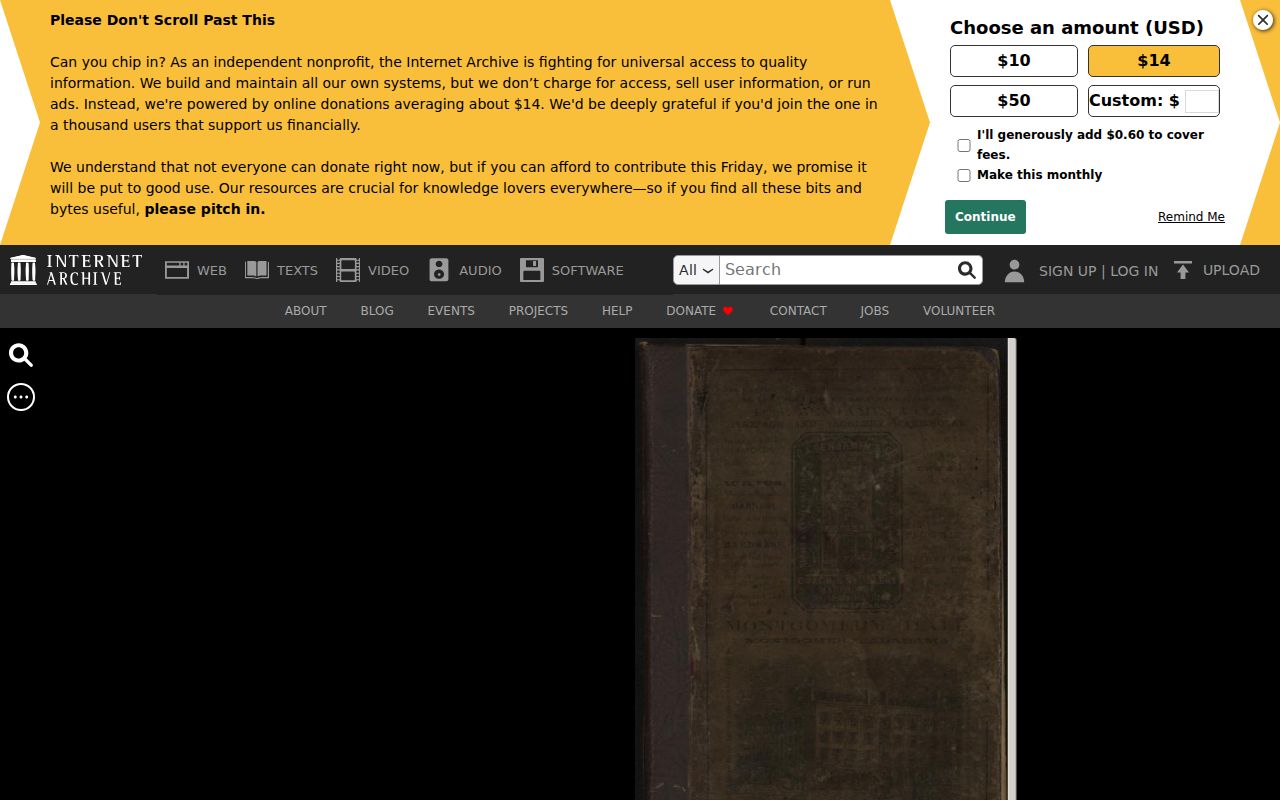
The scan preserves page order and visual context that a text-only result cannot. Use it to verify spellings, abbreviations, adjacent entries, advertisements, and the civic appendix before citing a person or place.